🎶 The Impact of Music in the Classroom
By Monika Garner-Smith, M.Ed.
“In every job that must be done, there is an element of fun.” — Mary Poppins
Music adds an element of fun to any learning experience—but it’s much more than just fun and games. Research shows that music enhances how the brain processes language and serves as a gateway to higher cognitive function.
Executive Function and the Brain
Consider this: executive functioning is the set of mental processes that control and regulate behavior to achieve goals. It’s often described as the “air traffic controller” of the brain and includes skills like planning, focusing attention, working memory, emotional control, and flexibility. These abilities help people manage tasks, make decisions, and adapt to changing circumstances. Music literally alters the nervous system and supports the development of these abilities. Let’s look at ways music can be used in the classroom throughout the day.
Setting the Tone for Learning
Music is the perfect tool to create a desired atmosphere for learning. Playing music as children arrive sets a tone of excitement and anticipation. Themed or seasonal tunes enhance classroom immersion, while various types of Music can alter and influence emotional regulation.
Easing Transitions
Transitions can be difficult for many children-especially students with autism spectrum disorders, sensory challenges, attention deficits and language delays. Using consistent songs or melodies to signal each transition helps students recognize routines and feel safe.
Examples include:
- A “Good Morning” song to signal circle time
- A with food references when its time to go to lunch
- A short tune signaling the time to change activities
These musical cues reduce stress and improve predictability: “I know what’s next, and I know what to do.”
Teaching Routines and Directions
When we use music for following directions, students will understand our words better, attend to what we are saying and learn routines. For toddlers and preschoolers, sing phrases like:
“This is the way we wash our hands…” or
“Put on your shoes…”
Adults everywhere cringe when they hear the Barney “clean up song”, but it works! Singing to children can turn chaos into calm.
Enhancing Focus and Creativity
Background music is used to stimulate internal processing and creativity. Playing reflective music, such as piano solos as students are writing or journaling holds attention for longer periods of time than without music.
One memorable example: while studying Van Gogh’s Starry Night, I created a multi-sensory experience. As students painted their own versions of the painting, I played “Vincent” by Don McLean. Instead of loud and disorganized, the mood was engaging, calm and creative.
The Power of Instruments
Using instruments is especially impactful for reading comprehension and math. The act of playing music involves auditory, visual motor and emotional centers of the brain. While engaged in music there is more brain activity than at any other time. According to research by Francis Rauscher, Ph.D., and Gordon Shaw, Ph.D., approximately 90% of the brain’s motor control capabilities are devoted to the hands, mouth and throat. Playing an instrument exercises the entire brain and stimulates general intelligence. In summary, Dr. Gordan Shaw’s research indicates that use of musical instruments shows an increase in spacial-temporal reasoning and cognition, which is directly tied to reading comprehension, math and science. It’s one of the few times that we use both the left and right side of the brain at the same time. As teachers we should take advantage of these easy tools! Use instruments and teach rhythmic patterns to improve reading and language. Rhythm underpins the brain’s ability to process and predict speech patterns and improves phonological awareness, comprehension and fluency. It helps students segment sounds into meaningful units crucial for language development. If you do not have instruments available, students will have just as much fun with homemade drums, jingle bells on pipe cleaners and other homemade instruments.
Interactive SongboardsTM
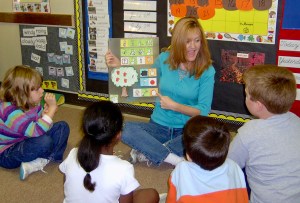
Outside The Pages™ offers a unique music-based literacy tool. Interactive SongboardsTM are interactive displays featuring pictures and moveable pieces that bring the pages of a story to life through music. Each original song, written by Outside The Pages™, is carefully crafted to reinforce and teach literacy skills and story elements. These versatile song boards can be used across the curriculum to enhance learning. Because these are manipulative, they are used beyond just singing the song. The visual pieces can help re-tell a story, guide students in answering comprehension questions and work on both receptive and expressive language.
Interactive SongboardsTM are available on our website, including step-by-step video guides for assembly and use.
💡 Final Thought
Remember that children do not care if you can carry a tune or if you have formal music training. They care about your joy in making these connections. They want to sing and play with you! So sing! Sing a Song!
🎶 Sing, sing a song
🎶 Make it simple to last your whole life long
🎶 Don’t worry that it’s not good enough
🎶 For anyone else to hear
🎶 Just sing, sing a song
– Joe Raposo for Sesame Street